




How to Test a Client Advisory Workflow in 28 Days
A portfolio review only becomes useful when it leads to the right client conversation and a clear next action. Here is a practical way to test that process with real client data, without judging success solely by immediate new fees.
What are you actually testing?
Most firms can produce more client reports. The harder question is whether they can consistently identify the businesses where a conversation is worth having, explain why, and follow through. A useful trial therefore tests a working process rather than the number of dashboards viewed.
The November 2026 VFD Academy demonstration proposed reviewing a sample of clients or the wider portfolio, selecting the right conversations and judging the response through observable evidence. This guide turns that approach into a practical practice-level test.
Set one clear outcome before you begin
By the end of the trial, the practice should be able to answer: Can we reliably move from client financial data to a short list of relevant conversations, and can we track what happens next?
Choose a realistic number of conversations based on the team’s available time. The webinar uses the example of having capacity for five proactive conversations, rather than trying to review everyone at once.
Four stages of a 28-day evaluation
These are the four stages described at the end of the webinar, with practical checks drawn from the earlier demonstration.
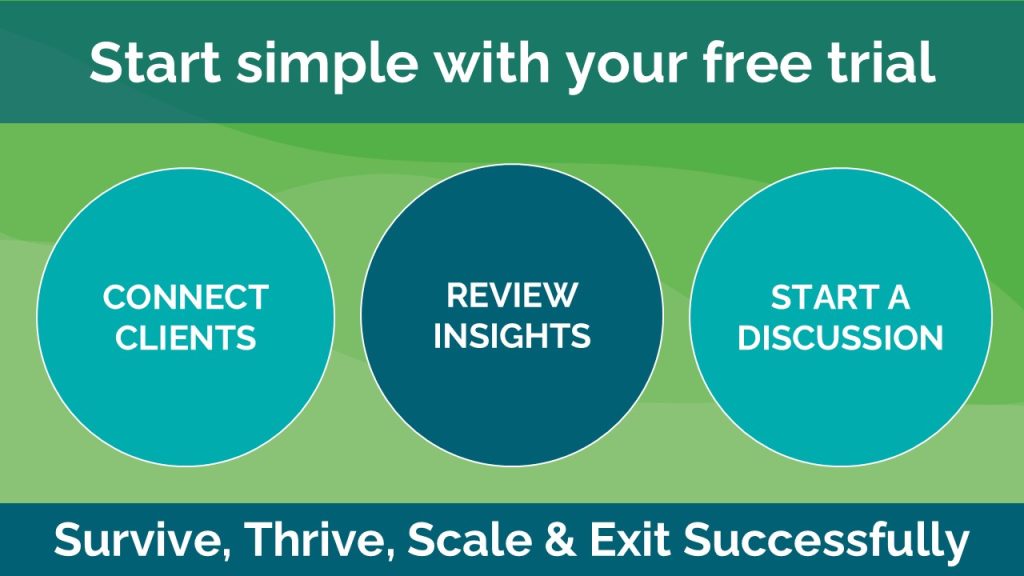
Connect: establish the data you can review
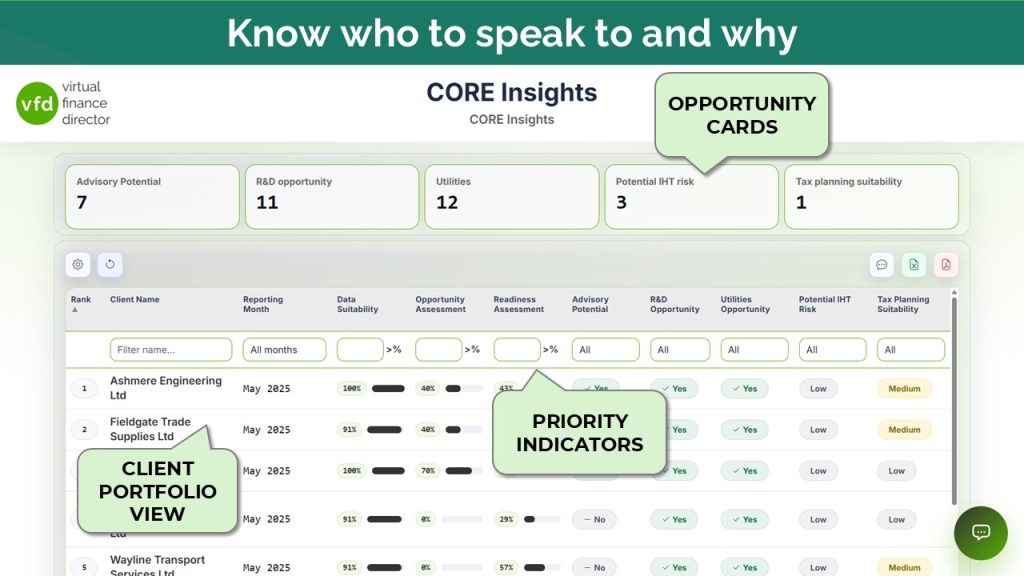
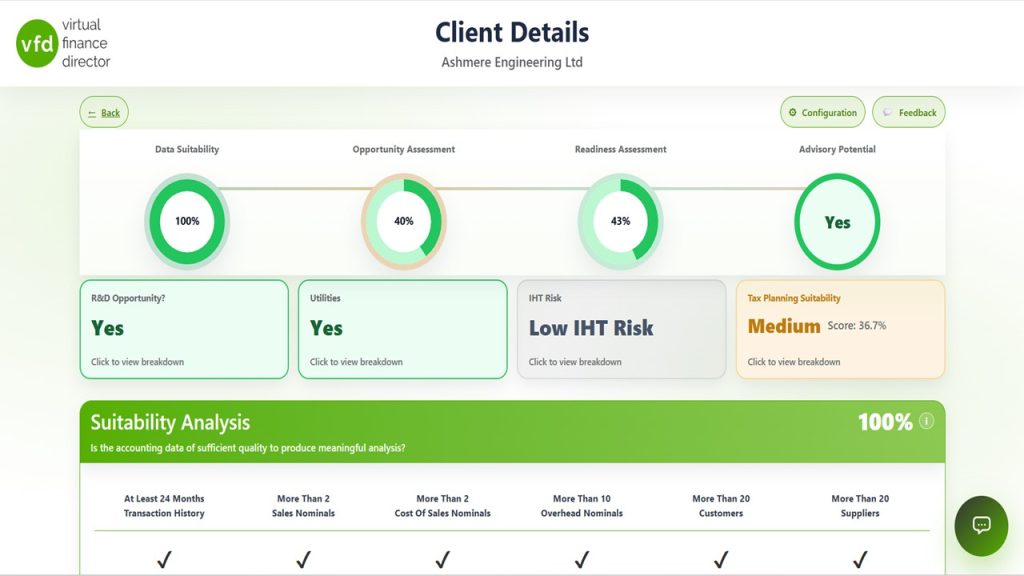
Load a representative group of clients or the full portfolio if appropriate. CORE Insights supports a multi-organisation Xero connection, as demonstrated. Check the underlying data suitability before drawing conclusions. Do not treat an automated score as a guarantee that the accounting records are correct.
Select and review: create a credible shortlist
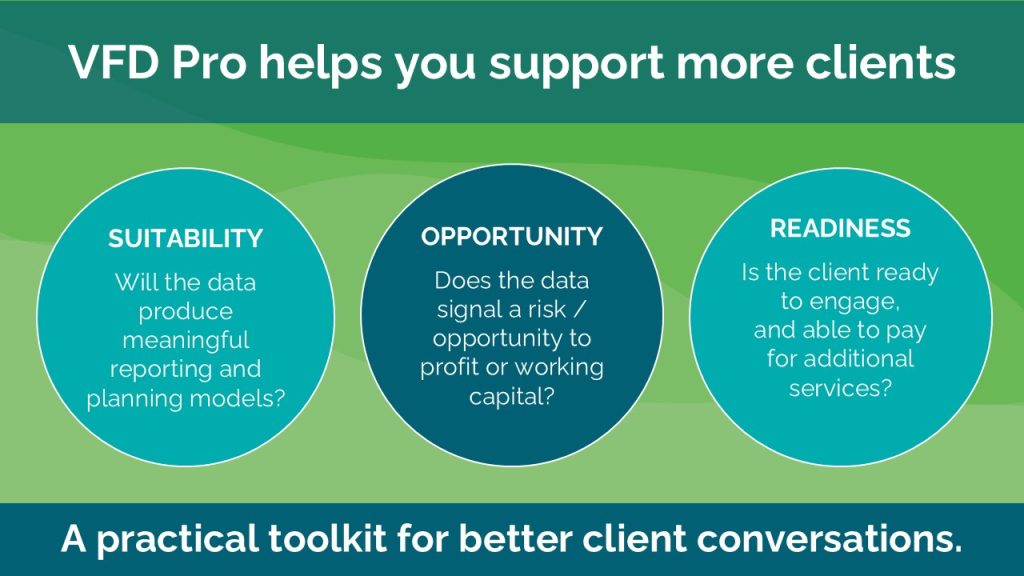
Use suitability, opportunity and readiness criteria to identify clients worth looking at. Adjust relevant thresholds where they do not reflect the practice's service model. Then use portfolio filters to reduce the working list to the number of discussions the team can actually progress.
Engage: make the evidence useful to a client
Open selected client records, investigate which financial drivers matter, and prepare a targeted communication or meeting agenda. Choose only the important KPIs, and combine the financial evidence with what the team already knows about the business. Where the conversation leads to an agreed action, record the action and relevant measures.
Evaluate: look for evidence of a repeatable process
Review the relevance of the shortlist, the time taken to prepare, whether conversations happened, how clients responded, and whether actions have been captured for a follow-up review. Consider commercial outcomes if they occur, but do not assume additional fee income is automatic.
A simple scorecard for the practice
The presenter identifies five practical measures for judging the trial. Record observations consistently, rather than relying on whether the team felt the software was useful.
| Measure | Question to answer | Evidence to retain |
|---|---|---|
| Speed to shortlist | How quickly did the team identify a credible working list? | Time or effort required to connect, configure and review |
| Relevance | Did the flags point towards matters worth discussing? | Specific financial drivers and adviser review notes |
| Follow-through | How many shortlisted clients progressed to a conversation or follow-up? | Meeting, contact or action status |
| Client response | Did the business owner recognise the issue and engage with it? | Responses and topics agreed for further review |
| Repeatability | Could another team member follow the same approach? | Use of consistent criteria, agendas and action records |
Example: turning a retention signal into a discussion
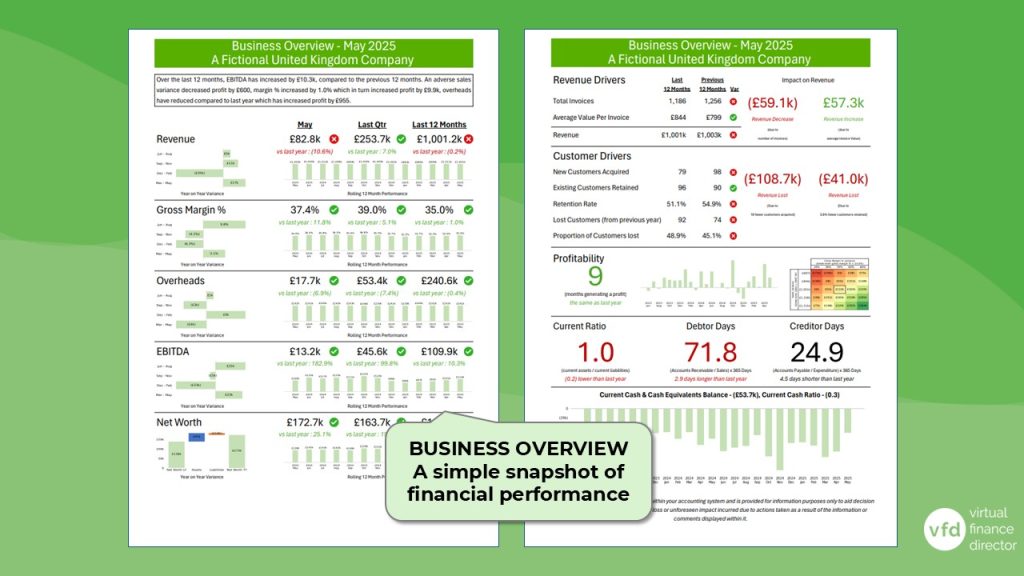
In the webinar demonstration, a client’s customer retention rate fell from approximately 55% to 51%. The system estimated a potential impact on profitability of nearly £60,000, using the estimated reduction in retained customers, average revenue per retained customer and average margin.
This was explicitly presented as an estimate, not an exact calculation for each customer lost. The practical use is to ask better questions: Why are fewer customers returning? Is the change concentrated in a particular customer group? Does average revenue from retained clients offer another opportunity?
The demonstration then selected retention rate, average revenue from retained customers and new-customer acquisition for a meeting agenda. That is the transition worth testing in a trial: from a financial signal, to a specific discussion, to an action with an intended KPI impact.
How to involve the team without creating another reporting project
Practice leader
Agree the purpose of the trial and the capacity available for proactive conversations.
Client manager
Sense-check the shortlist, prepare questions and use existing client meetings where appropriate.
Reviewer
At the end of the test, assess the five scorecard measures and decide whether the approach is worth repeating.
These roles are practical implementation suggestions, not named roles or commitments stated by the webinar presenter.
Avoid four common evaluation mistakes
- Counting every signal as an opportunity. Confirm data quality and use professional judgement before contacting a client.
- Trying to speak to the entire shortlist. Use filters to match the practice’s actual capacity.
- Treating an estimate as a verified financial result. The retention calculation in the webinar illustrates possible significance, not a precise measured loss.
- Looking only for instant fee income. Track relevance, engagement and repeatability as well as any new work agreed.
Resources to help you run the test
Watch the practical demonstration of the client shortlist, meeting agenda and action tracking. The CORE Insights Quick Start Guide provides platform instructions for connecting clients, generating analyses and recording actions.
Frequently asked questions
What should an accounting practice measure during a 28-day advisory trial?
Measure the time needed to create a relevant shortlist, the quality of client opportunities identified, the number of conversations or follow-ups progressed, the responses received and whether the process is repeatable.
Do we have to contact every client identified by the review?
No. The webinar distinguishes the wider group that meets configured criteria from the smaller number a team can realistically engage. Use filters and professional judgement to select a manageable first group.
Does a positive financial signal automatically mean the client is ready for advice?
No. The platform includes an indicative readiness assessment, but the presenter emphasises that client context and the adviser’s judgement remain important.
Is winning advisory fees the only way to judge the trial?
No. The presenter recommends evaluating observable evidence such as speed, relevance, completed follow-ups, client responses and repeatability. Additional work may be a valuable outcome where it occurs, but it is not guaranteed.